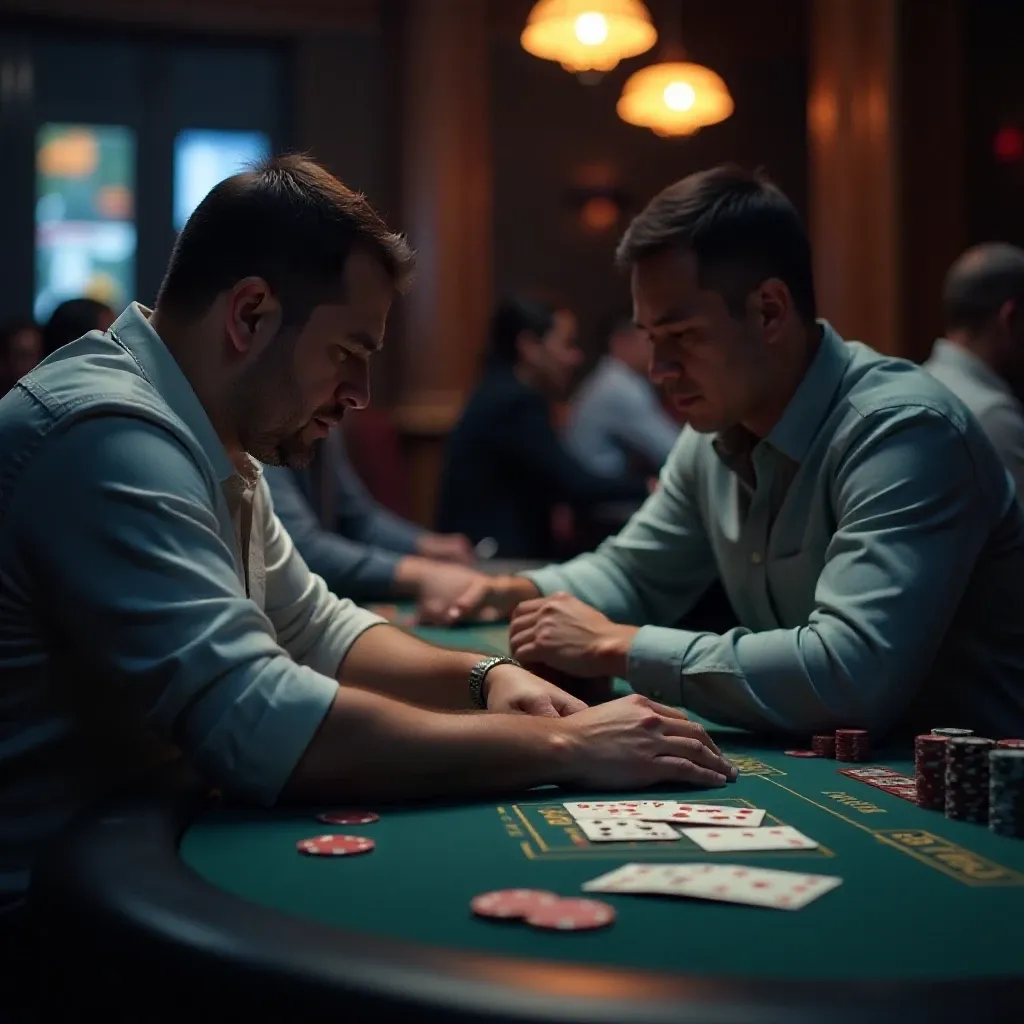
Online poker, a digital arena where fortunes can be won and lost with the click of a mouse, has captivated players worldwide. The allure is undeniable: the thrill of the game, the challenge of outwitting opponents, and the potential for substantial rewards. Yet, at the heart of every hand lies a fundamental question: is online poker a game of skill or luck?
Many see poker as a gamble, a mere chance, where fate determines the victor. While luck undoubtedly plays a role in the short term, dismissing poker as purely luck-based overlooks the depth and complexity of the game. True success, consistent winnings, isn’t about always having the best hand; it’s about mastering the art of strategic play, understanding probabilities, and making calculated decisions. This article is going to examine how skill profoundly influences outcomes in online poker and the skillful strategies to take the luck out of the equasion in the long run.
Defining Skill and Luck in Poker
Online poker is a fascinating blend of skill and luck, where fortunes can change in an instant. Poker skill definition revolves around strategic decision-making, a deep understanding of game theory, and the ability to adapt to opponents’ playing styles. Poker luck definition, on the other hand, encompasses the random distribution of cards and the unpredictable actions of other players. While some consider poker a chance-based game, the best players consistently demonstrate that skill triumphs over luck in the long run, showcasing elements which make it a skill-based game.
What is skill in the world of online poker?
In the realm of online poker, skill manifests in various forms. It’s about mastering bluffing techniques to deceive opponents, accurately reading tells (even in the online environment), and developing a sound betting strategy. Furthermore, effective bankroll management and astute game selection are crucial skills. High-level players don’t just rely on the cards they are dealt; they leverage their expertise to overcome weaker hands. For example, a player with extensive game theory knowledge might identify an opponent’s tendency to over-bluff and exploit this weakness to win pots, even with a mediocre hand. To develop this skill it requires a lot of study and dedication, but anyone can achieve it.
How does luck influence the game?
Luck inevitably plays a significant role in poker, largely through card distribution and the inherent unpredictability of the game. Even the most skilled player can experience a run of bad beats, highlighting the impact of short-term variance. It’s not uncommon to witness a beginner defeating a seasoned pro due to a lucky draw or a fortunate river card. However, it’s crucial to remember that while luck can be a deciding factor in individual hands, long-term skill generally prevails. The best players know how to mitigate the effects of bad luck and take advantage of good luck to come out on top.
Evidence and Studies
Decades of poker research, data analysis and statistical analysis have sought to quantify the balance between skill and luck in poker, with many studies using high-volume data sets to show the division of professional and casual players. Some studies suggest professional players can achieve a positive expectation through superior decision-making, while others find the magnitude of skill is often overestimated, and luck plays a substantial role, particularly in the short term. Ultimately, poker research attempts to statistically represent the expertise, risk management, and psychological elements inherent to poker, providing empirical data to address the nuances of the arguments.
The role of simulations in understanding relative importance.
Artificial intelligence and opponent modelling also play a significant role in understanding poker strategy through simulations. Poker AI, such as the Larkey Model, aims to dissect the strategic intricacies of poker by creating algorithms capable of mimicking optimal play. As AI models improve, the emphasis on strategy increases, proving the importance of skill within the game. Early in my own poker journey, I experimented with rudimentary models that focused on calculating pot odds and expected value. These early simulations, while basic, allowed me to understand my decision-making process regarding bet sizing and range calculations. As the complexity of these models progressed, I began incorporating opponent modelling to analyze tendencies. However, such models were often limited by computational power and the difficulty of accurately predicting human behavior.

Mitigating Luck: Actionable Strategies
What you need to consider besides the game itself, to become a pro.
To truly elevate your game beyond the whims of chance, look beyond the cards themselves. Game selection is paramount. Don’t just jump into any game; seek out those where your skill can truly shine and the impact of luck is minimized. For instance, instead of high-variance games, consider those that reward consistent, strategic play. I once found myself consistently drained playing short deck hold’em. The swings were brutal! I switched to pot-limit Omaha, with players that were less aggressive, and focused on exploiting their mistakes. It made a world of difference.
Another crucial, often overlooked, element is emotional control. I will be honest, I have thrown away more money than I care to admit by letting tilt get the best of me. One bad beat would lead to another, and soon I was making reckless decisions, chasing losses, and completely abandoning my carefully crafted strategy. Recognize when emotions are clouding your judgement. If you feel yourself getting frustrated, angry, or overly confident, step away. Take a break, clear your head, and come back when you’re able to approach the game with a clear and rational mindset. Remember, success in the long run isn’t about winning every single hand but, about making smart, calculated decisions consistently.
Mastering bankroll management, positional play, risk assessment, and emotional control aren’t just abstract concepts; they are tangible tools that can significantly impact your results. Through astute game selection, I enhanced my chances of long-term profitability. It’s about minimizing the influence of luck and maximizing the impact of your skill and strategic acumen.
The Role of Skill: Strategies and Techniques
Poker is more than just luck; it’s a battlefield of wits where honed skills become invaluable assets. Mastering poker involves a deep understanding of various strategies and techniques, transforming the game from a gamble into a calculated pursuit.
Understanding the basics of game theory and why it works
Game theory, at its core, is the mathematics of strategic decision-making. In poker, it helps you analyze situations, calculate expected values, and make informed choices based on probabilities. For instance, understanding the concept of “minimum defense frequency” can prevent you from being exploited by aggressive players. There was a time when I was just starting out, I kept calling every bet, thinking I was being clever. I quickly learned that understanding pot odds and calculating the value of each play was the real key to success. It’s not just about guessing; it’s about using data and analysis to your advantage. It also helps to understand the value of each play, and each player, by analyzing patterns. It is not always easy to become a master in math to start mastering poker, but it is with dedication and the right tools to start developing game intelligence to your game.
How to apply betting to specific scenarios
Effective betting isn’t random; it’s tailored to specific scenarios. Your bankroll, the odds, and the texture of the board all play crucial roles. For example, imagine holding a strong hand on a coordinated board. A larger bet might discourage draws, protecting your equity. Conversely, a smaller bet could induce calls from weaker hands. By applying math to the game, betting, in my experience, transitioned from guesswork to a calculated weapon. I remember once being down to my last few chips when I realized understanding “implied odds” could turn the tide. I started analyzing the potential future value of my hand, not just the current pot. It’s about understanding the potential future value of the hand. Suddenly, I wasn’t just betting; I was strategically investing. It also helps to understand the value of each play, and each player, by analyzing patterns. It is not always easy to become a master in math to start mastering poker, but it is with dedication and the right tools to start developing game intelligence to your game.
How to master the ability to read, what to watch, and how to use that information to your favor.
Reading opponents is an art form – a blend of observation, psychology, and intuition. It is understanding the basic things about body language. Are they avoiding eye contact? Are their hands trembling? These subtle tells can reveal the strength or weakness of their hand. But remember, experienced players can also use reverse tells to mislead you. One time, I played against a player who always scratched his nose when he was bluffing. It was obvious, but I noticed other players were not paying attention. I used that knowledge to my advantage, leading to some profitable hands. It’s about paying attention to the smallest of details.
The Impact of Luck: Variance and Randomness
Let’s face it, poker isn’t purely a game of skill; luck plays a significant role, especially in the short run. “Variance” in poker refers to the statistical fluctuations that deviate from expected outcomes. This means even when playing perfectly, bad beats and downswings are inevitable. A seemingly inferior hand can sometimes win, leading to frustration. These moments of randomness can test even the most seasoned players.
Imagine holding pocket aces and losing to a player who went all-in with 7-2 offsuit – a classic example of a bad beat. Or picture yourself hitting a prolonged downswing despite making sound decisions. Understanding that these scenarios are part of the game is crucial. Don’t let short-term misfortunes lead to tilt – emotional play driven by anger or frustration. Take a deep breath, reassess your strategy, and remember that statistical averages will eventually even out. It’s about making the right decisions consistently over the long haul, not dwelling on individual lucky or unlucky hands. Skill is how to diminish luck impact.
The Short Run vs. The Long Run
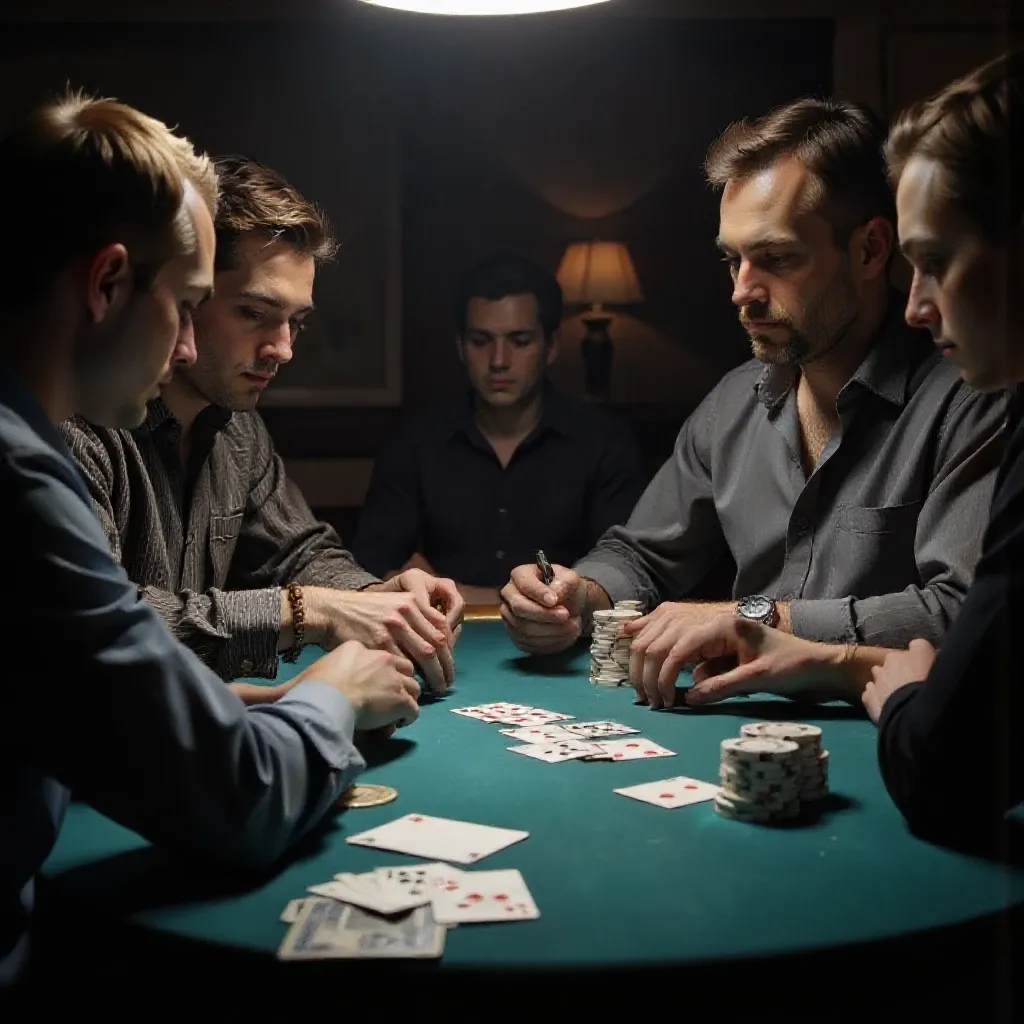
It’s easy to get swept up in moments of exceptional fortune. Picture this: you’re at the poker table, and seemingly every hand you play turns to gold. You might feel like a poker god, but that feeling is not real. This is short-term luck, a fleeting moment in time. While it’s exhilarating, it’s crucial to remember that success in a small sample size doesn’t necessarily reflect your true skill level. It is very temping to believe in your poker skill after a lucky strike.
True mastery, a thriving poker career, and consistent results are built over the long term. That requires continuous learning, adapting to changing conditions, and honing your abilities. Don’t let a lucky streak inflate your ego or lead to complacency. Instead, view it as a temporary upswing and keep striving for improvement.
Legal and Regulatory Implications
Poker’s classification as a game of skill or chance is pivotal due to its profound legal ramifications. Gambling laws vary significantly across jurisdictions, with many countries holding differing views on poker legality. Skill-based games often face lighter regulation, while chance-based games are subjected to stricter gambling laws. This distinction directly impacts online gaming law, potentially determining whether poker is permitted, taxed, or even criminalized within a specific region.
Conclusion: Embracing Both Skill and Variance
In conclusion, a true poker player embraces both the skillful strategy and the delightful unpredictability of variance. Skill provides the bedrock for long-term success; it’s the consistent application of knowledge, reading opponents, and making calculated decisions. But variance? That’s the spice that keeps the game thrilling, the element of surprise that ensures no two hands are ever quite the same. Develop a healthy poker mindset where you acknowledge that poker leans more toward being a strategic game, not one based on mere chance. So, embrace the variance, hone your skills, and, above all, enjoy the game!